Why we must support the Right to Repair Bill

An adaptation of this opinion piece by CEO Laura Gemmell was published here

Last April, the Consumer Guarantees Act (Right to Repair) Amendment Bill was plucked from the parliamentary lucky dip to the delight (and quite frankly, surprise) of advocates who had long been pushing for stronger repair rights.

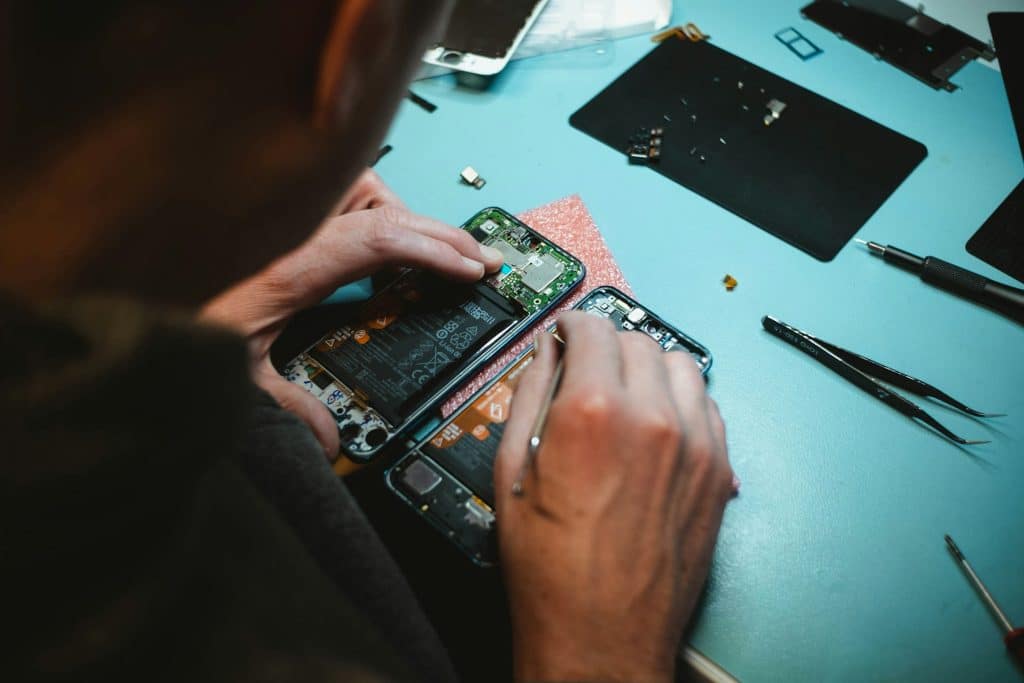
The proposed Amendment aims to ensure our products are designed to last longer by mandating access to repair information, tools, and parts. Nothing wild – just basic consumer rights.

While the current Consumer Guarantees Act (CGA) 1993 offers some protection for consumers, it does not explicitly guarantee the right to repair. Nor does it require manufacturers to do the heavy lifting by providing accessible repair services or solutions.

This means that most of our products are designed with propriety parts, weaponised warranties, or poor instructions for proper maintenance and repair. In other words, designed to become obsolete.

When something eventually breaks, Kiwis are forced to rely on expensive manufacturer repairs or replace the product entirely – lending itself to a whole new set of frustrations.

Don’t fall for repair myths

Anyone who has ever owned a household appliance would know that there is no good reason to oppose the Right to Repair Bill.

Yet, I’m still bracing myself for the most common argument against environmental responsibility there is – cost. I don’t want to be crass, but New Zealanders must realise that like all the irreparable products piling up in our landfills each year, that’s a load of crap.

There might be upfront costs involved for businesses in designing repairable products or providing repair resources, like manuals or parts. But the overall financial impact is often neutral or even positive in the long run.

According to an estimate by the EU Commission, its Right to Repair Directive will result in sellers and manufacturers saving around €15.6 billion (more than NZD$28.5 billion) over the next 15 years as they repair products instead of replacing them for free.

The dumping of electronic waste (anything with a plug) in particular, is tantamount to throwing money away. Such products contain valuable and increasingly scarce resources, already the focus of many geopolitical struggles. Recovering these materials presents an opportunity to build economic and climate resilience by reducing our dependence on volatile international markets.

Then there are the environmental benefits, which are of course, significant. The EU’s new rules are projected to reduce the amount of waste to landfill in the region, by a whopping 2 million tonnes annually, by 2030. Manufacturing items from raw materials is resource intensive and releases significant carbon emissions. By repairing and reusing what we already have, we can greatly reduce our negative impact on the planet.

Repair can tackle New Zealand’s waste problem

Truth be told, clean green New Zealand is actually a pretty wasteful nation. We currently generate more than 600kg of waste per person, each year. To put that in perspective,  Japan, which is 41% larger than New Zealand, averages between 400-450kg.

Irreparable goods aren’t entirely to blame for that, but it’s my hope that this Bill will catalyse a return to quality over quantity, where consumers favour goods they know have been made to last and excellent customer service – over the likes of Temu, who undermine responsible local suppliers.

Imagine getting your appliances repaired locally without it costing an arm and a leg; simultaneously creating repair jobs, strengthening communities and the economy.

We have often heard from this Government, a preference for being fast followers. Well, here’s a prime opportunity to be just that. Should New Zealand adopt this Amendment, it will be in good company.

The EU has several measures in place including its Right to Repair and Ecodesign Directives and Circular Economy Action Plan.  France has its own Repairability Index and New York, Minnesota and California have passed Right to Repair laws at a state level.

Locally, the Right to Repair movement has had significant support in this country with hundreds of repair cafes and events nationwide. Consumer NZ also delivered a petition to parliament last year which was backed by more than 21,000 New Zealanders calling for a repairability label.

Backed by local businesses

Before you dismiss me as another woke woman who can’t get off her soapbox, it’s also worth noting that the amendment, which Solicitor General Judith Collins confirmed as consistent with New Zealand’s Bill of Rights, aligns with a source of national pride; Kiwis and their no.8 wire ingenuity.

Fixing what we own is not a new philosophy to us. Many New Zealand businesses have successfully implemented voluntary repair schemes and are reaping the benefits. In their experience, doing so fosters brand loyalty, provides new revenue streams (spare parts, repair kits etc.) and allows them to command a premium for their products and reduces the number of returns.

These businesses include:

  • BLUNT Umbrellas – Known for their sleek, high-performance umbrellas, BLUNT not only ensures their products are designed to last but offers a dedicated repair service for consumers. With multiple BLUNT workshops across the globe to repair their products, BLUNT aims to expand their in-house workshops, as well as encouraging customers to do their own repairs at home through online tutorials and educational resources.

  • Kaiwaka Clothing – An estimated 180,000 tonnes of clothing and textile waste is thrown away every year in New Zealand landfills. To combat this issue, Kaiwaka clothing offer a free lifetime warranty and repair service for consumers. Operating since 1975, Kaiwaka also promote their “buy once, buy right” philosophy, fighting against mass consumption and the take-make-waste culture.

Show your support

At Eco Choice Aotearoa, we actively seek to work with businesses that choose to extend or give their products a second life through repair and product stewardship solutions.

Together with a group of passionate organisations including Go Well Consulting, Circularity, Proxima Consulting, Sustainable Business Network, The Lever Room and more, we penned an open letter urging the government to advance the Bill through its first reading. You can read our open letter, here and submit your organisation’s logo to nick@gowellconsulting.co.nz to show your support.

UPDATE:

On the 19th of February, the Right to Repair Amendment Bill was voted through to the Select Committee in Parliament. Public submissions are now being called for the amendment, due Thursday 3rd April 2025. If you’d like to make your vote count, we urge you to make a submission here.
Clare Hobby – Global Director of External Engagement at TCO Certified, Board Member at the Sustainable Leadership Purchasing Council

Clare has been working in sustainability for over 20 years — before it was cool, and before most companies knew what scope 3 emissions were. Her main challenge today is getting companies to look beyond emissions data to other factors like biodiversity, human rights, etc. This includes encouraging organisations to focus on actions that actually move the needle – sustainable purchasing, product longevity, and greater access to renewable energy.

clare-hobby-900px

What first drew you to working in sustainability, and what keeps you motivated?

I like to say I “slid on a banana peel” into sustainability before it became mainstream. Back in the late ‘90s I worked in the foreign service and was on a trade mission with a number of sustainability-focused organizations. I was so inspired by their commitment to the issues, and something clicked – sustainability was where I belonged. 

Can you tell us about the sustainability challenge you’re most focused on right now?

Right now we’re focused on circularity as a way of reducing the climate impact of electronics. Upwards of 80% of the lifetime emissions in the average computer happen in the manufacturing phase, so this means we have to make sure that electronics are designed and made to last. That way we can reduce the need for excess manufacturing. But good design and manufacturing are only part of the story. The important challenge for all of us is to use our IT products longer. Take care of them, share and repair. It makes a big difference to the climate impact and slows the flow of e-waste – and we’re also working on a sustainable cloud initiative, so stay tuned. 

What helps you stay effective in this field without burning out or compromising your values?

Two things keep me going – the mission and the people! The mission is clear and there’s still work to do. The people are the glue! I’ve had the opportunity to work alongside the most dedicated and interesting people I could hope for. From interviewing factory workers in China, to working on complex sustainability challenges with our team, or representing TCO Certified in UN meetings, there’s a deep appreciation that comes from this shared commitment to a more sustainable world. I’m also really grateful to work for an organisation where sustainability impact is the number one goal. It’s in our DNA. This clarity is so important so we can lead with purpose and integrity. 

Moumita Das Roy – Commercial Communications Manager, Dulux NZ

Moumita’s path to sustainability wasn’t a straight line, it evolved from her lived experiences. At Dulux NZ, Moumita’s work sits at the intersection of marketing, communication, and sustainability, helping to translate complex environmental commitments into stories that customers, partners, and communities can understand and trust.

What first drew you to working in sustainability, and what keeps you motivated?

My sustainability journey wasn’t planned. It evolved from my lived experiences. Migrating to Aotearoa meant rebuilding both life and career, and that process made me deeply conscious of resources, resilience, and community. I learned quickly that nothing should be taken for granted. Not opportunities, not materials, not the environment that sustains us. As a communicator, I became increasingly aware that sustainability succeeds or fails based on how well we tell its story. Data alone rarely changes behaviour; connection does. That realisation drew me toward my sustainability work.

What’s surprised you most about the barriers that still exist in the sustainability space?

The biggest barriers aren’t technological, they’re human. Real progress happens when sustainability becomes a shared responsibility rather than a specialist function. When people understand that small, consistent decisions matter, momentum builds naturally.

How can women building a career in sustainability be better supported?

We need to broaden our understanding of what sustainability leadership looks like. Many women arrive in this field through non-traditional pathways. Communications, community engagement, design, or business strategy. Support means reducing the invisible burden of constantly proving credibility, particularly for migrant and culturally diverse women navigating new professional environments. Sustainability requires collaboration, empathy, and long-term thinking, qualities often undervalued in traditional leadership models but critical for systemic change. Creating spaces where those strengths are recognised will help more women thrive in this sector.

Elisha Willeam Peter – Sustainability Consultant, Tonkin + Taylor

Elisha works in climate change, helping businesses with their emissions reduction plans, carbon inventories, ecolabel verifications, and climate risk assessments. She represents what it feels like to be a young person navigating climate anxiety while continuing to show up with passion and persistence to create a sustainable future.

What first drew you to working in sustainability, and what keeps you motivated? 

I’ve always wanted to work in the environmental space but I never realised there was such a defined field as sustainability when I was at university. After graduating, I looked for roles that would allow me to contribute to environmental issues, and that’s how I found my first sustainability role. You could say I stumbled into it, but I’m so glad I did. Working in sustainability has opened my eyes to the human side of things. I’ve learned that actions, policies, and decisions all have very tangible impacts on both the environment and communities. We can’t make decisions that protect the planet at the expense of people, there has to be a balance. That’s what keeps me motivated.

How can women building a career in sustainability be better supported?

I genuinely believe that women supporting women goes a long way. I’ve been fortunate to have been surrounded by admirable and inspiring women, both professionally and personally. Throughout my career so far, I’ve been guided by women who have encouraged me to develop my technical skills and challenged me to step outside my comfort zone. It’s also important to create safe and inclusive spaces that amplify women’s voices. Many women, myself included, can find it difficult to assert ourselves in discussions, so building spaces where we feel comfortable speaking up and developing our public speaking and leadership skills is essential.

What helps you stay effective in this field without burning out or compromising your values?

It hasn’t always been easy. With increasing competition in the field and tight budgets often leading organisations deprioritising sustainability, it can feel like an uphill battle. But I try to remind myself that even small, consistent actions are much better than doing nothing at all. When things do get too overwhelming, I make it a point to recognize that and take time to step back — whether that means slowing down, spending time in nature, or leaning on my colleagues in the sustainability space who share the same passion and understand the challenges. Those moments of rest and connection really help me stay grounded and stay true to my values.

Gabriela Baron – Senior Lecturer, Faculty of Engineering and Design, University of Auckland

Gabriela’s work sits at the intersection of design, conservation, and community participation. She’s particularly focused on how we reimagine conservation — not as separation from nature, but as relationship woven into culture, education, and everyday decision-making.

What first drew you to working in sustainability, and what keeps you motivated?

I was first drawn to sustainability because I felt, very deeply, that the way human systems operated were disconnected from life itself, from land, from community, from our own inner nature. Sustainability, for me, was never a technical misalignment, but about remembering that we are part of living systems.

What keeps me motivated is purpose. Purpose is not something you find once and can never look back, it is something that keeps calling you forward, especially on days when you feel lost. I find strength in helping people rediscover their relationship with the more-than-human world. I believe purpose is like a quiet compass, it picks you up when you are discouraged and it reminds you why the work matters when the world feels overwhelming.

What’s surprised you most about the barriers that still exist in the sustainability space?

What surprises me the most is how often sustainability is still framed through structures of control rather than relationship. Sometimes the conversation is purely technical, very institutional, or very male-dominated in its style of leadership, and we risk forgetting the emotional, cultural, and spiritual dimensions of how humans are interwoven with natural systems.

Another barrier is the persistence of voices telling women that they must choose between softness and strength, between care and intellectual rigor, between nurturing and leadership. I don’t believe these are opposites. I believe they are different expressions of the same creative force.

How can women building a career in sustainability be better supported?

Women in sustainability need spaces where they can grow without having to shrink parts of themselves to fit into existing systems. We need communities of women who celebrate each other’s success, who lift each other up, and who remind each other that our value is not defined by how loudly we speak or how hard we perform. I think of it as a kind of rewilding: allowing ourselves to step out of the domestication of external expectations and reconnect with our own inner rhythms, creativity, and wisdom. And let feminine energies express themselves in the ways that feel most natural and unique to each of us. 

We need diversity and redundancy. I would love to see more mentorship, more cross-generational connection, more spaces where girls and women can see themselves reflected in leadership, science, design, and conservation (through a feminine, relentless lens) and where they can feel free to find their tribe of women who celebrate life, beauty, and purpose together.

Rachael Randal – Manager, Sustainable Procurement & Supply Chain Partnerships, Science and Sustainability Auckland Transport

Rachael leads a sustainability and procurement team at Auckland Transport, working across $2 billion worth of contracts to turn sustainability commitments into measurable outcomes. She’s not just a champion of sustainable procurement but takes an intersectional approach to sustainability as she works to advance economic, environmental and social rights for all.

What first drew you to working in sustainability, and what keeps you motivated?

I spent the first part of my career working in communications and engagement in the healthcare sector. My favourite part of that mahi was working closely with patient advocacy groups, hearing about their experiences navigating complex systems. The people I met and worked with taught me to look at policy and strategy through an equity lens and to always ask questions about whose voice is being heard, who is the system designed for, and why.

After having children and when my second child was a toddler, I made the decision to go back to university to do postgraduate study and master’s research focussed on the social, political and economic dimensions of global environmental change. Together, these experiences have shaped how I think about environmental, social and economic rights, climate action and sustainability, and the importance of always critically interrogating the power dynamics at play.

What’s surprised you most about the barriers that still exist in the sustainability space?

What surprises and worries me the most is how narrow the sustainability lens can become. There’s a real risk of carbon tunnel vision, where reporting emissions becomes the dominant, sometimes only, focus. Reducing emissions is critical, of course, and we do need to measure and report to demonstrate this. But if we pursue it in isolation, we won’t get the outcome we need. Sustainability isn’t single-issue, it’s about ‘meeting the needs of the present without compromising the ability of future generations to meet their own needs.’ Environmental, social, and economic systems intersect. If we electrify a fleet but ignore questions around who benefits and who is left behind, or transition industries without thinking about biodiversity, workforce impacts and even accept that people around the world will be exploited and human rights will be degraded in the process, we have totally missed the point.

I’m also often surprised by how little understanding there still is about intersectionality. The communities most affected by environmental degradation and climate related hazards are the same communities facing economic exclusion, systemic racism and other discrimination, or health, housing and education inequities. People don’t experience climate risk, economic insecurity or social marginalisation in neat silos. They experience them simultaneously and these harms and disparities exacerbate each other.

What would progress look like in your industry five years from now? What needs to change to get there?

The rate of change can often feel frustratingly slow, but when I look back across the last 5 years, it’s clear that progress has been made, and this is much easier to demonstrate now we have better systems for data capture, monitoring and impact evaluation. Five years from now, I’d like to see more recognition around New Zealand of the important role of procurement in enabling organisations’ sustainability commitments. This is key if they are to move beyond ambition statements to action and progress.

I’d also like to see more cross-sector collaboration, as this is essential if we are to generate meaningful outcomes. Clarity on where each entity sits within the theory of change so we can each understand our role in the system will help organisations to align decisions accordingly and maximise our collective impact.

Found this post insightful? Share it with your network using the options below: